Bamboo Rice from Gudalur: Where It Comes From and Why It's So Rare
Bamboo rice is one of the rarest grains in India, harvested only when bamboo flowers once in decades. Learn where it comes from and how to buy it in bulk from Gudalur.
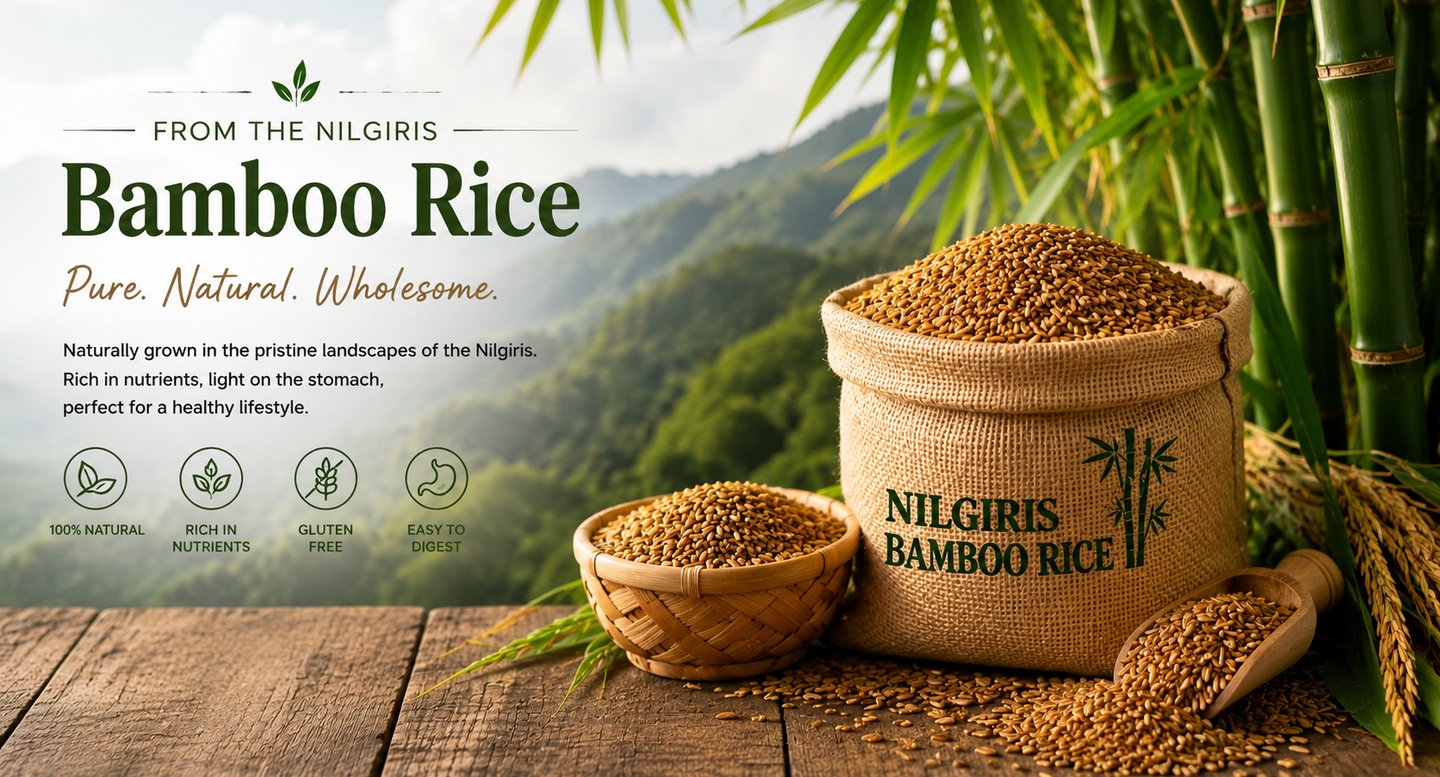
A grain that most of India has never tasted — because it only appears once every few decades, deep inside the forests of the Nilgiris.
If you've never heard of bamboo rice, you're not alone — it's one of the rarest food grains in the world. It doesn't come from a paddy field. It comes from bamboo forests, and only when the bamboo decides to flower. In this post, we'll answer the questions we get asked most often: what it is, where it comes from, how it's harvested, and how you can source it in bulk.
What is bamboo rice?
Bamboo rice, also called "bamboo seed" or mulayari in some South Indian languages, is not rice at all in the botanical sense — it's the seed produced by bamboo plants when they flower. It looks similar to broken rice, has a slightly nutty flavour, and is naturally gluten-free. It's traditionally cooked like rice or ground into flour for porridge and flatbreads.
Where does bamboo rice come from?
Our bamboo rice is sourced from the bamboo forests around Gudalur, on the edge of the Mudumalai Tiger Reserve in the Nilgiris. This region has some of the last remaining natural bamboo stands in South India, growing wild alongside the forest — not cultivated in plantations.
Why is bamboo rice so rare?
Bamboo doesn't flower every season like a paddy crop. Depending on the species, a bamboo grove may flower only once every 40 to 60 years — and when it does, the entire grove flowers together, produces seed, and then the parent plants die back. This gregarious flowering cycle is why bamboo rice can't be grown on demand or guaranteed every year. When a flowering event happens, it has to be harvested quickly, in a short window, before wildlife and insects consume the seed.
Who harvests it, and how?
Bamboo rice is hand-harvested by Kurumba and Irula tribal families who live in and around the forest and know exactly when and where a bamboo flowering event is happening. The seed is collected from the forest floor and surrounding stands, then sun-dried and hand-cleaned before it's ready for sale. Because the harvesting window is so short and the terrain is forest, this cannot be mechanised — it stays a fully manual, community-led harvest.
What does bamboo rice taste like, and how is it used?
It has a mild, slightly nutty, earthy flavour — less sticky than regular rice. It's traditionally cooked the same way as rice (boiled or steamed), used to make porridge (kanji), or ground into flour for flatbreads. In parts of the Nilgiris and Northeast India, it's a well-known tribal staple, though it remains largely unknown in mainstream Indian kitchens.
Is bamboo rice available every year?
No — and this is the most important thing for buyers to understand. Because bamboo flowering is irregular and unpredictable, supply is not consistent year to year. When we have confirmed stock from a recent harvest, we say so clearly; we never source substitute grains and sell them as bamboo rice. If you're planning to stock or resell it, we recommend treating it as a limited, seasonal specialty item rather than a year-round SKU.
How can I buy bamboo rice in bulk?
BTN Import & Export sources bamboo rice directly from tribal harvesters in the Gudalur forest belt, with no middlemen in the supply chain. For bulk or wholesale orders, contact us directly through btnimportexport.com with your required quantity, and we'll confirm current stock and harvest details.
Is bamboo rice healthier than white rice?
Bamboo rice is unhusked and unpolished, so it keeps more of its natural fibre, protein, and minerals than milled white rice, which loses most of that during polishing. A peer-reviewed comparison of bamboo seed against rice and wheat found bamboo seed came out higher in fibre, protein, and key minerals, and much richer in flavonoids (plant antioxidants) than either grain. In short: it's closer to a whole grain than white rice is, which generally makes it the more nutrient-dense choice. We keep this factual rather than making medical claims — if you're managing a specific health condition, check with a doctor or nutritionist before changing your diet.
What is bamboo rice, and can you really eat it?
Yes — bamboo rice is a genuine, traditional food, not a novelty. It's the seed of the bamboo plant, eaten for generations by forest communities in the Nilgiris and Northeast India, exactly the way you'd eat any rice: boiled, steamed, or as porridge. Before it reaches you, the seed is sun-dried and hand-cleaned by the harvesters, so it's ready to cook straight from the pack — no special preparation needed beyond a normal rinse.
How to cook bamboo rice: a beginner's guide
Bamboo rice cooks much like regular rice, with a couple of small adjustments:
Rinse the rice 2–3 times in clean water to remove dust from drying and handling.
Soak for 20–30 minutes if you prefer a softer texture (optional, but helps it cook more evenly).
Cook with water in a ratio of about 1 part rice to 1.5 parts water — slightly less water than you'd use for white rice.
Simmer covered for 15–18 minutes, then turn off the heat and let it sit, covered, for another 10 minutes to finish steaming.
Fluff and serve — it pairs well with a simple vegetable or fish curry, the traditional way it's eaten in the Nilgiris, or as a base for a grain bowl.
Frequently Asked Questions
Is bamboo rice actually rice? No. It's the seed of the bamboo plant, not a grain from the rice (paddy) family. It's called "rice" because of its size, shape, and how it's cooked and eaten.
Is bamboo rice gluten-free? Yes, bamboo rice is naturally gluten-free.
Why is bamboo rice more expensive than regular rice?
It's hand-harvested in a short window during an irregular, once-in-decades flowering event, entirely by manual forest labour — there is no way to mass-produce or plant it on demand.
Where can I buy genuine Nilgiris bamboo rice in bulk?
Directly from BTN Import & Export, sourced from Kurumba and Irula harvesters near Gudalur, Tamil Nadu.
Is bamboo rice healthier than white rice?
It generally is — since it's unhusked and unpolished, it retains more fibre, protein, and minerals than milled white rice.
Can you really eat bamboo rice safely?
Yes. It's a traditional food eaten for generations in the Nilgiris and Northeast India, sun-dried and hand-cleaned before sale, and cooked the same way as regular rice.
How do I cook bamboo rice?
Rinse it, use slightly less water than white rice (about 1:1.5 rice to water), simmer for 15–18 minutes, then let it sit covered for 10 minutes before serving.
Quality
Organic spices and fresh produce from India.
Export
Honey
contact@btnimportexport.com
+91-8489127676
© 2026. All rights reserved.